UNM wins demo award at International Workshop in Structural Health Monitoring
December 2, 2025 - By Carly Bowling
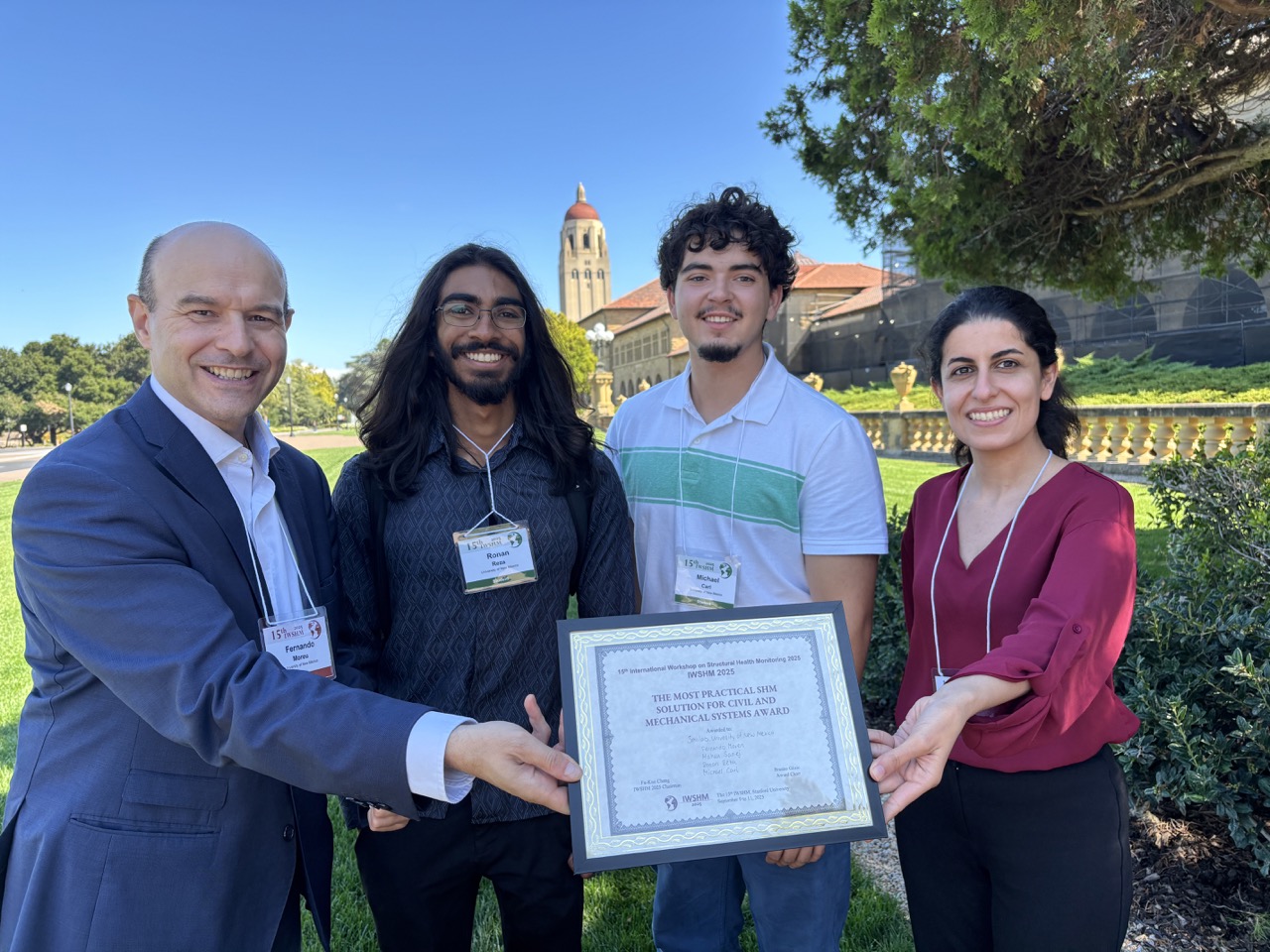
SHM Team: Fernando Moreu, Ronan Reza, Michael Carl and Mahsa Sanei after receiving the SHM in Action award at Palo Alto, September 10, 2025.
For the second time in a row, The University of New Mexico took home an award from Stanford University’s International Workshop in Structural Health Monitoring (IWSHM 2025) by showcasing how humans and robots can work together to transform the future of structural health monitoring.
A team led by Fernando Moreu, associate professor in the Gerald May Department of Civil, Construction and Environmental Engineering, won the Most Practical SHM Solution for Civil Infrastructures Award at the Structural Health Monitoring in Action Demonstration, where participants present a live demo of innovation in the field. The theme of IWSHM25 was SHM: Ensuring Mobility and Autonomy with Sustainability. The team’s demo and the international competition can be watched on YouTube.
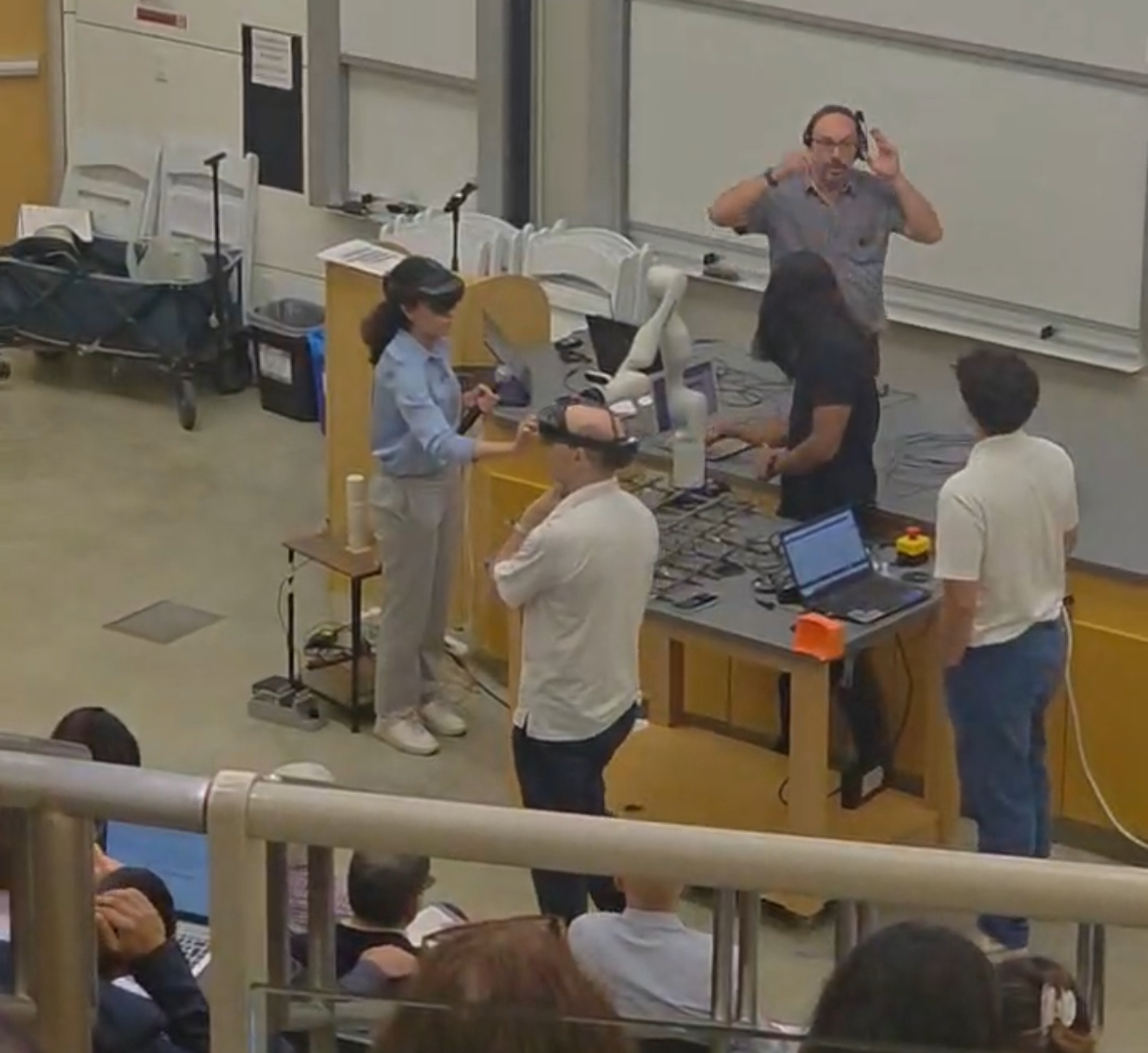
The UNM team during the SHM in Action demonstration at Stanford. The team shows the audience a real-time human-in-the-loop Kinova Arm control during construction.
“Winning the Structural Health Monitoring in Action Competition two times in a row is a recognition of the innovation, impact and hard work of our students. This is a unique, international victory with competitors from all over the world that travel to Stanford every two years, including top universities, start up companies and industry representatives, and other research laboratories,” Moreu said.
Moreu competed with members of his research group, the Smart Management of Infrastructure Laboratory (SMILab), including Mahsa Sanei, a Ph.D. student in the SMILab, Ronan Reza, an undergraduate studying Civil Engineering, and Michael Carl, an undergraduate studying Electrical and Computer Engineering. The team demonstrated its 2050 vision of structural health monitoring where humans, machines and learning models collaborate through human-in-the-loop frameworks. The live demo showcased an augmented reality-enabled interface with real-time quality assurance, quality control, human-data interaction, and robotic control during civil infrastructure inspection and maintenance.
Graduate students Hector Valenzuela, Piedad Miranda, and undergraduate Elias Mosco were involved in preparing for IWSHM.
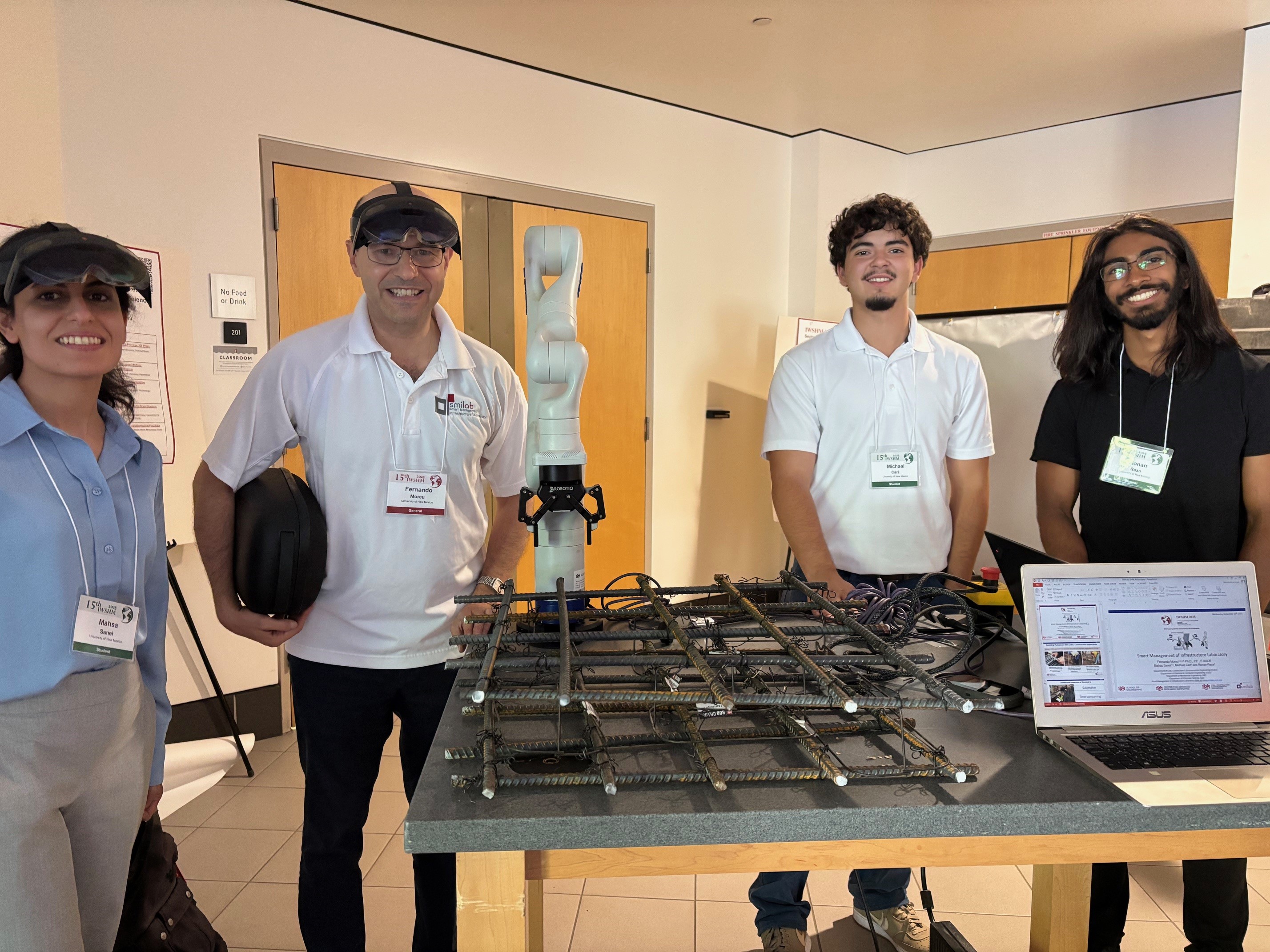
The UNM team backstage before the demo.
“Overall, this is a success of various students involved in multidisciplinary, impactful research developed at UNM who are motivated to study in the supportive environment that enables their success worldwide. The credit also goes to SMILab alumni who are now industry and academic mentors on their own and are examples on their own to others,” Moreu said.
The SMILab is already preparing for 2027, with several augmented reality and digital twins research projects in the works. Moreu said the research group has projects supported by the Office of Naval Research, the National Science Foundation, NASA, the USDOT Southern Transportation Plains Center, the Air Force Research Laboratories, the Transportation Research Board, the Federal Railroad Administration, and Los Alamos National Laboratory and more.