UNM study shows randomization can improve quantum computer performance in presence of noise
May 13, 2026
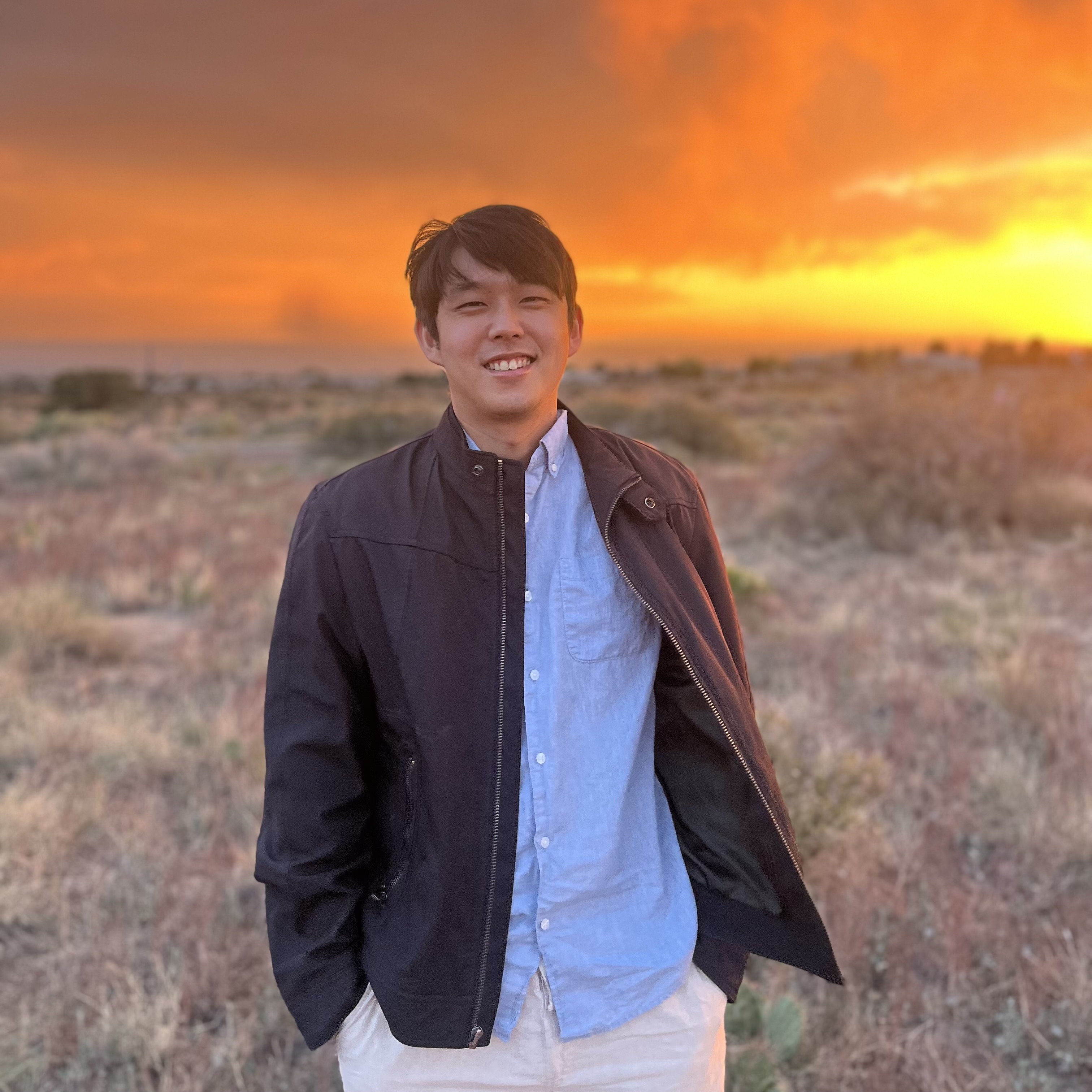
New research led by a graduating Ph.D. student in The University of New Mexico Department of Electrical and Computer Engineering has shown that randomization can improve quantum computer performance in the presence of noise.
Ph.D. student Leeseok Kim led the research under the advisement of Assistant Professor Milad Marvian, with support from Changhao Yi, a former member of Marvian’s group. Their findings, titled “Faster Randomized Dynamical Decoupling,” were published in the journal Physical Review Letters and presented at QSim 2025, an international conference in quantum simulation.
Quantum computers have the potential to solve certain problems faster than classical computers, with promising applications in areas such as simulation and discovery of new materials, optimization, and cryptography. However, building quantum computers that can solve practically relevant problems at scale remains difficult because they are susceptible to noise. Reducing noise more effectively is therefore a key challenge.
Kim’s research focuses on quantum control protocols for more effective noise suppression. In this work, Kim investigated how robust quantum control methods can be combined with randomized strategies to enhance noise suppression. In particular, the team developed a new randomized construction of dynamical decoupling, a widely used quantum control technique, and proved that it can outperform any deterministic counterpart, including the protocols currently used in modern quantum devices.
“My Ph.D. work focuses on designing new quantum control protocols that suppress noise more effectively,” Kim said. “In this project, we found a way to use randomized strategies to control quantum systems to outperform existing robust control protocols.”
Kim said one of the main advantages of the approach is its simplicity: it can be incorporated into existing quantum computing platforms without major changes, making it easier for researchers to apply in current systems.
Kim earned his bachelor’s degree from Cornell University and will begin a postdoctoral fellowship at Los Alamos National Laboratory after finishing his Ph.D. this Spring.
“Leeseok’s Ph.D. thesis, which received distinction, advances our understanding of a range of important problems, from noise suppression to the power of quantum computers in simulation tasks,” Marvian said.