UNM Engineering

Message from the Dean
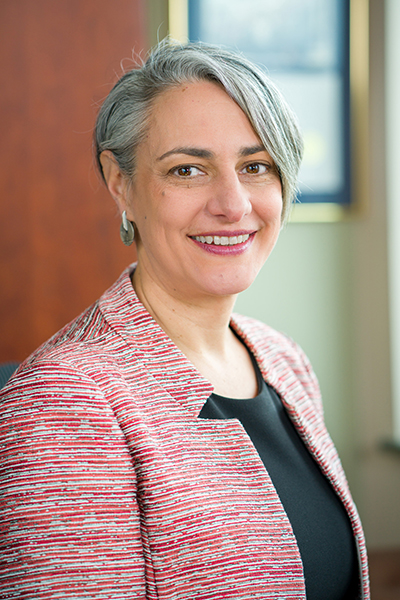
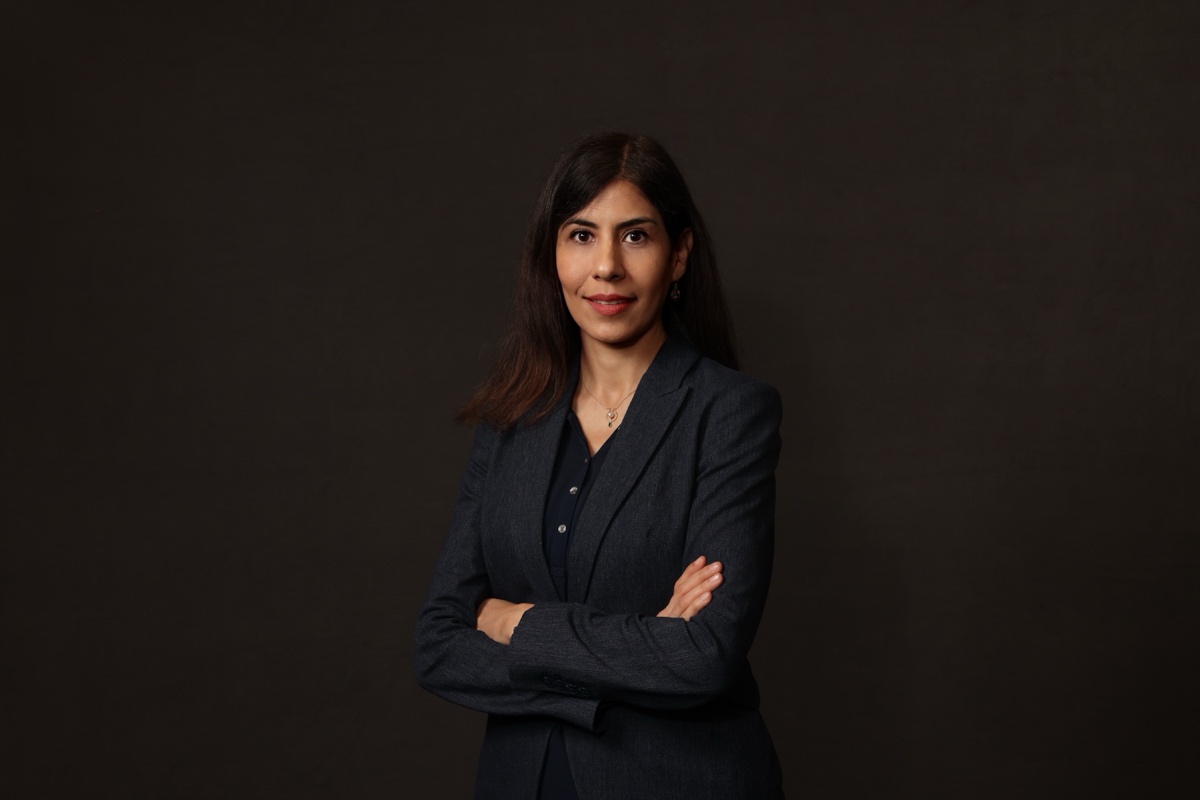
Donna Riley

In this year’s edition, we’re looking ahead at how The University of New Mexico is engineering futures for students, research and communities. From the school-wide launch of our First-Year Engineering program to the creation of a brand-new bachelor’s degree in bioengineering, we’re leveling up our educational offerings to ensure Lobo engineers continue to innovate and find solutions to tomorrow’s problems.

In the pages ahead, we’ve included an update on our strategic plan, Our Path Forward 2024-2028, with some exciting progress in student success, faculty development and research.

One of the greatest achievements of the last year has been the research success of our early-career faculty. This year six of our assistant professors received CAREER Awards from the National Science Foundation. Others received prestigious and competitive early-career grants from the National Institutes of Health and the Department of Energy. These researchers have promising careers ahead of them and have already made significant contributions to cybersecurity, advanced manufacturing, nanomedicine, and more. They follow in the footsteps of ourworld-class tenured faculty, two of whom received PECASE awards at the start of 2025 — presidential-level honors recognizing the most impactful early career research in the country.

We also bring you a story of science fiction come to life through a fortuitous interaction between UNM alumni and their collaborators. The story serves as a reminder of how we can influence each other for the better, a theme echoed in the work of another UNM Engineer who established a scholarship to honor a close friend he met right on campus.

As we begin a new school year, I’m happy to report that all six of our departments will soon be led by permanent chairs, allowing us to better serve our faculty, staff and students. Marek Flaska began as chair of the Department of Nuclear Engineering in August, and our new chair for the Department of Chemical and Biological Engineering will begin in January 2027. You can read more about our leadership changes and new faculty in our Transitions and Achievements section.

Thank you for being here as we look ahead at another exciting year!

... we’re leveling up our educational offerings to ensure Lobo engineers continue to innovate and find solutions totomorrow’s problems.

Contents

UNM Engineering develops common first-year student experience

Article by Carly Bowling | UNM Engineering | 2026 | Jump to

First-year students working together

A common first-year experience in the School of Engineering will soon be available to all incoming students thanks to the appointment of a new faculty director and the ongoing work of an award-winning team of engineering and education researchers.

School of Engineering faculty break record with 6 NSF CAREER awards

Article by Carly Bowling | UNM Engineering | 2026 | Jump to

John King demonstrating optics on optics table

Six faculty members in The University of New Mexico School of Engineering received 2026 National Science Foundation CAREER Awards in what is believed to be a single-year record for the school. It’s no accident.

SoE to offer new bachelor’s degree in bioengineering

Article by Carly Bowling | UNM Engineering | 2026 | Jump to

researcher adding liquid to a flask

The program is the first of its kind in the state

Research Roundup

Article by Carly Bowling | UNM Engineering | 2026 | Jump to

researcher holding up vial

Stranger than science fiction

Article by Carly Bowling | UNM Engineering | 2026 | Jump to

shape-changing alloy antenna

A distant future. The colonization of space. Discovery of an alien technology that could change everything. If these sound like elements of a science fiction story, it’s because they are, but now researchers have brought a piece of ultramodern, alien-like antenna technology to life — with a surprising connection to The University of New Mexico.

Global friendship leaves lasting legacy at UNM Engineering

Article by Carly Bowling | UNM Engineering | 2026 | Jump to

Andres Salazar (left) standing with Benjamin Garba Ishaku (right)

Five for Eric Lang

Article by Carly Bowling | UNM Engineering | 2026 | Jump to

Eric Lang

Eric Lang joined the Department of Nuclear Engineering in fall 2022, specializing in nuclear fusion engineering and nuclear materials.

UNM Engineering develops common first-year student experience

Article by Carly Bowling | UNM Engineering | 2026

A common first-year experience in the School of Engineering will soon be available to all incoming students thanks to the appointment of a new faculty director and the ongoing work of an award-winning team of engineering and education researchers.

First-year students working together

A unified first-year engineering experience will help new students get connected to the School soon after arrival at UNM and decide what major best suits them early on in their coursework.

In August, Stephen Secules joined the School as the inaugural director of the Integrative and First-Year Engineering program and an associate professor with tenure in the Department of Mechanical Engineering. In his new role, Secules will lead expansion of UNM’s award-winning first‐year engineering experience, which entered its second pilot year this fall and will be made available to all incoming SoE students beginning Fall 2026.

Secules will also work to develop a proposed integrative engineering major pending state approval. That program will allow students to explore individual career and research interests while completing core engineering and mathematics requirements. With several years of industry experience working as an acoustical consultant in London and Silicon Valley, he brings valuable technical engineering expertise along with academic knowledge in engineering education.

“My own professional work and academic background have felt like such an integration, from working on interdisciplinary design teams for the acoustics of concert halls and voice evacuation systems, to collaborating with engineering faculty to help create more equitable engineering education,” Secules said. “The world that today’s engineering students enter will be more interconnected and interdisciplinary than ever.”

In a related development, the UNM engineering team that started the first-year course in Fall 2024 earned top honors at the American Society for Engineering Education annual conference held over the summer. Their paper, titled “An Integrative, Querencia-Informed Approach to First-Year Engineering,” won Best Paper in the First-Year Programs Division.

The paper explored how the pilot first-year course supports student identity formation, self-efficacy, persistence intentions and consequences of learning. The course itself is guided by two frameworks: “funds of knowledge,” which incorporate students’ cultural backgrounds and everyday experiences, and “querencia,” a place-based learning approach.

students at first-year engineering experience working togetherstudents at first-year engineering experience working togetherstudents at first-year engineering experience working together
Students at first-year engineering experience working together.

“At UNM SoE, we serve diverse students, many of whom are the first in their families to attend college,” said Vanessa Svihla, professor in the Organization, Information and Learning Sciences Program and the Department of Chemical and Biological Engineering. “One thing this course does well is it helps students understand the roles that engineers, computer scientists, and construction managers can play in solving problems here in New Mexico.”

The course requires students to complete individual assignments about how they fit into their future profession. Students also complete group projects related to solving problems relevant to New Mexico, like water resilience and decarbonization.

“In our real-world jobs, we work on teams of people with different needs,” said Yadeeh Sawyer, first and second-year experience manager in the Engineering Student Success Center. “We want to give students a solid foundation in working in these cross-disciplinary environments.”

The pilot-year team also included Ruben Lopez-Para, a former UNM postdoctoral fellow; Christina Salas, associate professor in the Department of Mechanical Engineering; Madalyn Wilson-Fetrow, a graduate student in the Organization, Information and Learning Sciences Program; and Carl Willis, professor of practice in the Department of Nuclear Engineering.

Secules will work collaboratively with the existing first-year team as they prepare to make the course available to all incoming UNM Engineering students in Fall 2026.

SoE faculty break record with 6 NSF CAREER awards

Article by Carly Bowling | UNM Engineering | 2026

Six faculty members in The University of New Mexico School of Engineering received 2026 National Science Foundation CAREER Awards in what is believed to be a single-year record for the school. It’s no accident.

John King demonstrating optics on optics table

A year and a half ago, the School created the NSF CAREER Cohort in coordination with UNM’s Faculty Research Development Office (FRDO) to prepare researchers to apply for one of the nation’s most significant scientific research grants. Associate Dean for Faculty Affairs Eva Chi wanted to find a way to help talented researchers write competitive grants without having to learn through trial and error.

Chi worked with Isela Balli, faculty research support officer, and Hannah Yohalem, FRDO assistant director of research strategy and programming, to host sessions on writing one-pagers, creating data management plans, acquiring letters from department chairs, creating budgets, and understanding available university resources. The cohort also provided dedicated writing time and a question-and-answer session with recently awarded CAREER recipients.

The resulting CAREER Awards represent a diverse range of subjects aimed at topics like protecting internet users from malicious malware and developing materials that hold up better in wildfires.

Making internet access safer

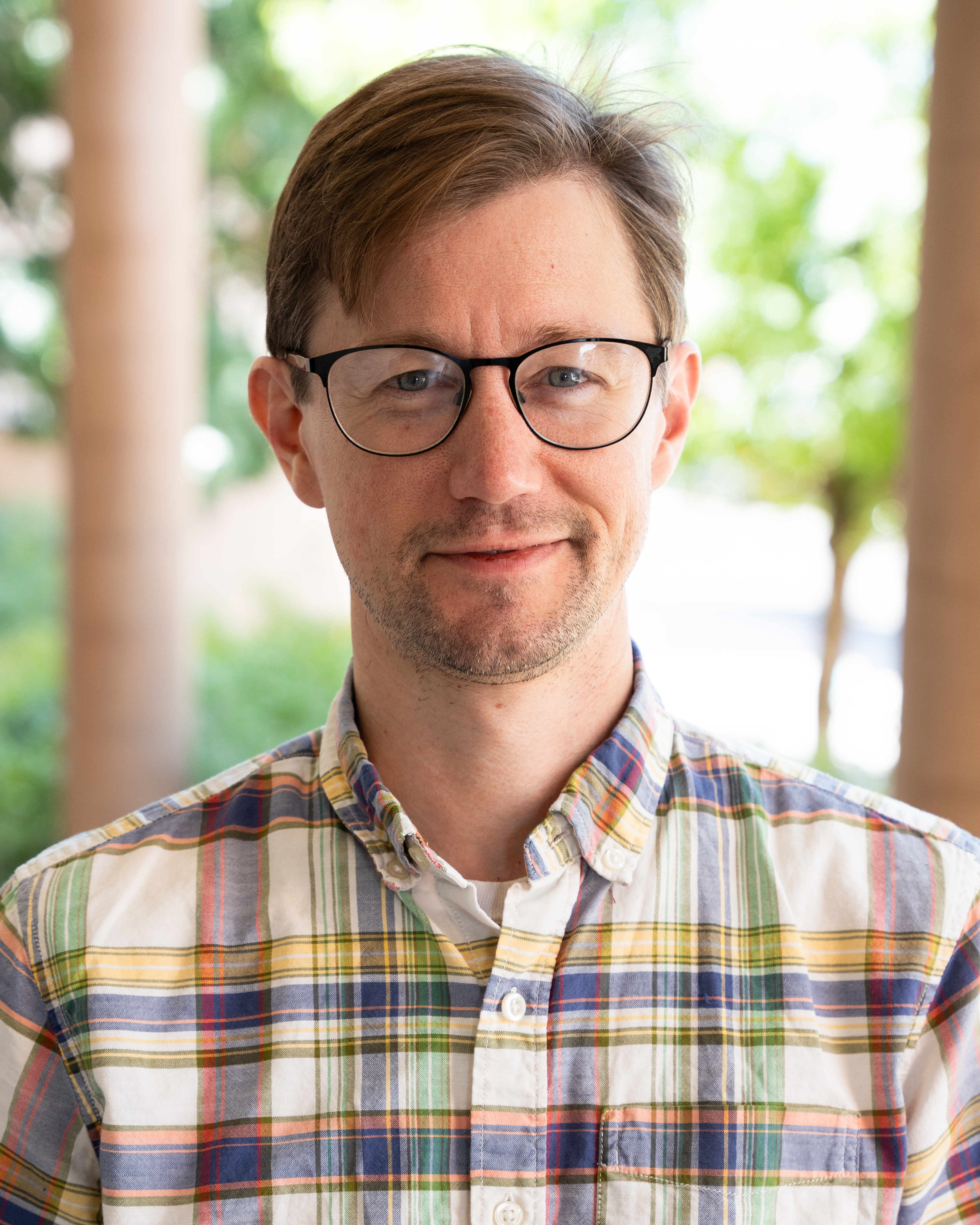
Afsah Anwar

Assistant Professor Afsah Anwar's project, titled "Robust, Platform-Agnostic Defense Against VPN Misconfiguration Abuse in Malware Campaigns," investigates how malicious actors exploit virtual private networks (VPNs) to steal personal data.

When a user installs a VPN on their device, their internet traffic routes through the VPN server before reaching sites like Google or Amazon. In the process, identifying information is disguised and protected, but malicious groups can weaponize this same infrastructure, designing software to harvest personal information rather than shield it.

With millions of people relying on VPNs globally, the threat of financial fraud, identity theft and exposure to sensitive personal data is high. Anwar’s research will help make internet access, particularly in oppressive regimes, safer.

Creating adaptable DNA nanotechnology

William Bricker

Assistant Professor William Bricker’s project, titled “Higher-order junctions for adaptable and multi-dimensional DNA nanotechnology,” will use computational approaches to expand the design and construction of DNA building blocks. Because DNA is predictably designed, inexpensive and nontoxic, it is a promising material for biotechnological applications such as energy transfer, biomolecular logic, sensing, and therapeutics, but its use is somewhat limited by its standard architecture.

Bricker’s work aims to expand the design space for DNA by using computational modeling to build DNA architectures with a six-way junction, enabling the development of 3D structures. His ultimate goal is to develop a software platform that can be used to facilitate the design and routing of DNA nanotechnology using higher-order junctions, necessitated by the complexity of the design space.

Making intelligent systems scalable through efficiency

Claus Danielson

Assistant Professor Claus Danielson's project, titled "Exploiting Symmetry for Extreme-Scale Constrained Dynamical Systems," explores a new approach to scalable autonomy: enabling intelligent systems to make decisions more efficiently rather than relying on ever-increasing computational resources.

Rather than scaling autonomous systems through massive data centers, specialized hardware, or large amounts of memory, Danielson's research seeks to identify and exploit structural properties within complex systems to intelligently reuse computations and reduce computational requirements.

The project focuses on developing new algorithms that leverage structural properties, like symmetry, in large-scale engineered systems such as logistics networks and power systems. By exploiting these structural relationships, the research aims to enable efficient decision-making in systems that would otherwise be computationally prohibitive.

Developing fire-resistant construction materials

Maryam Hojati

Assistant Professor Maryam Hojati's project, titled "Fire Resistant Geopolymer Materials for Resilient Structures in Wildfire Prone Regions," seeks to develop construction materials that can withstand increasingly severe wildfires.

Hojati's research explores geopolymers, advanced materials known for their durability and high-temperature performance, and how they can be adapted for construction systems exposed to extreme heat. As wildfires become increasingly common and destructive, the ability to build structures that can survive extreme heat could protect lives and preserve communities.

Understanding how nucleic acids and amino acids interact

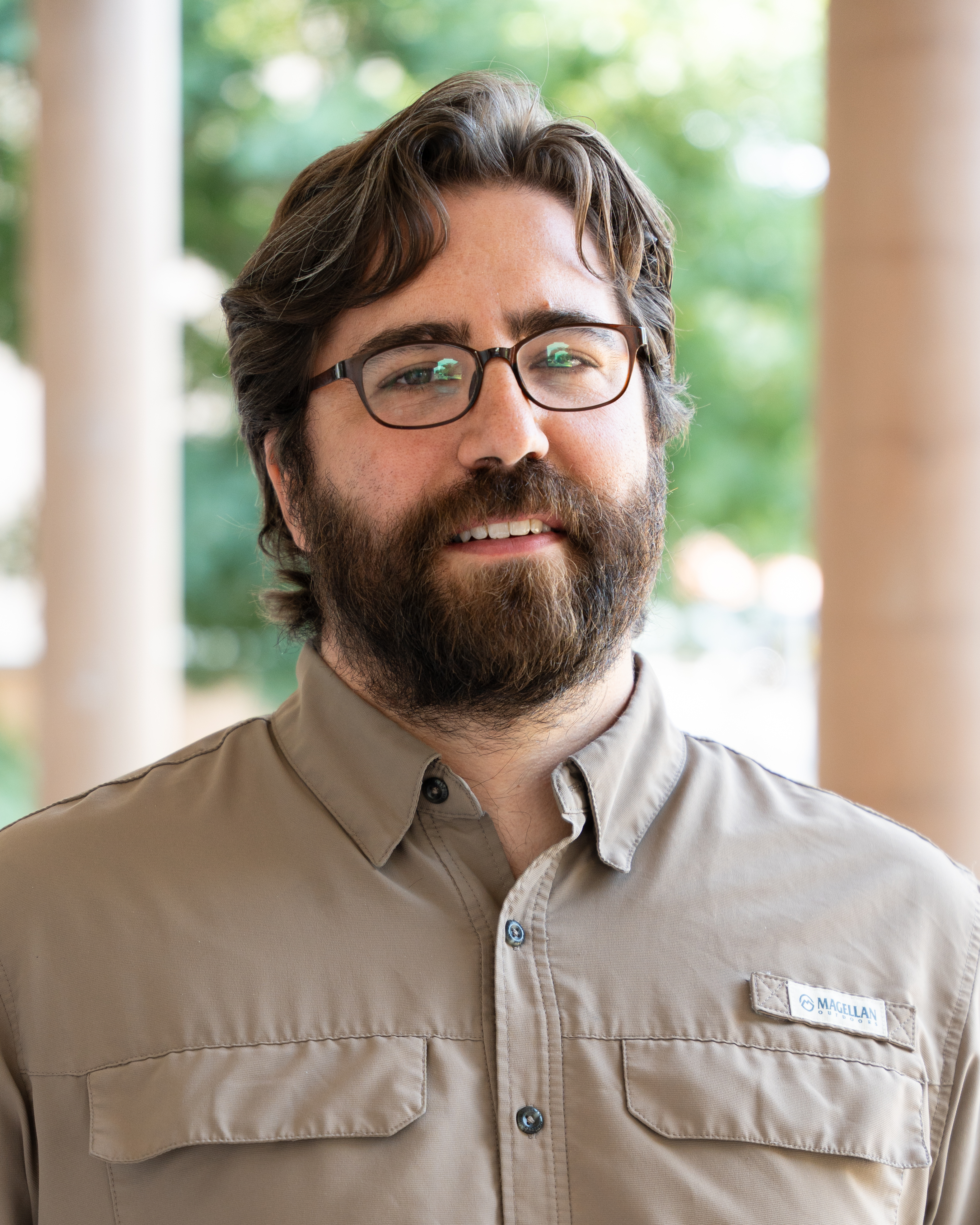
John King

Interactions between nucleic acids and amino acids are central to biology — from the way our bodies translate genetic information to how we process viral infections — yet how those interactions take place remains poorly understood. Assistant Professor John King's project, titled "Excited States and their Role in Protein-RNA Binding Dynamics," will use single-molecule spectroscopy to characterize these natural processes.

Understanding these molecular interactions at the atomic level could unlock new approaches to treating diseases caused by viral infections, genetic disorders, and cancer. King's goals are two-fold: from a physical perspective, better understanding of the interactions could enable engineers to develop targeted therapeutics; from a practical perspective, modeling the interactions could offer key insights into how other natural systems operate.

Using ultrafast lasers for precision manufacturing of advanced ceramic materials

Heng Zuo

Assistant Professor Heng Zuo's project, titled "Ultrafast Laser Manufacturing of Polymer-Derived Ceramics for High-Performance Ceramic Composite Materials," focuses on developing new ways to use ultrafast lasers to manufacture polymer-derived ceramics and ceramic composite materials with improved control over their structure and properties.

Advanced ceramic composites are used in demanding applications ranging from space exploration and energy systems to semiconductor technologies and biomedical devices. However, conventional ceramic manufacturing often involves multiple processing steps and offers limited control over material structure at small length scales. Zuo's project aims to address this challenge by studying how extremely short laser pulses interact with preceramic polymers and how those interactions can be used to shape, modify, and transform materials with high precision.

SoE to offer new bachelor's degree in bioengineering

Article by Carly Bowling | UNM Engineering | 2026

The program is the first of its kind in the state

researcher adding liquid to a flask

The University of New Mexico School of Engineering was approved by the New Mexico Higher Education Department to launch a bioengineering bachelor’s degree. It is believed to be the School’s first new undergraduate degree program in 40 years.

The new bioengineering degree will help prepare students to work in healthcare, agriculture, food science, pharmaceuticals, and other fields related to biological innovation.

“We’ve heard from many students that a bachelor’s degree in bioengineering is highly desirable, and we are thrilled to meet that demand," said Donna Riley, Jim and Ellen King Dean of Engineering and Computing. "Biotech is an economic development priority for the state and we believe this degree will enhance our ability to foster innovation in this area."

Students majoring in bioengineering will be able to focus on specific paths, like pre-med, biomaterials, bioseparations, biomechanics, tissue engineering, and biomanufacturing. The highly requested program will give those interested in engineering and medical school a clear path to complete all necessary coursework.

"Preparing tomorrow's healthcare workforce means giving students opportunities to solve real-world challenges across disciplines,” said Executive Vice President of UNM Health Sciences Mike Richards. “This program will equip graduates with the skills to advance innovation and improve healthcare for New Mexicans.”

Bioengineering is already offered as a concentration for students majoring in chemical engineering. The expansion to a full undergraduate degree offering is supported by extensive faculty expertise and SoE’s long-running Biomedical Engineering Program.

“Building on UNM’s strengths in biomaterials, tissue engineering and mechanobiology, this program will equip graduates with the knowledge and technical expertise to meet the growing demand for professionals at the intersection of engineering, medicine, and biomedical innovation,” said Provost and Executive Vice President for Academic Affairs Barbara Rodriguez. ”Rooted in the needs of our communities, this degree creates new opportunities for our students, strengthens the state's high-tech talent pipeline, and advances discoveries that improve health and quality of life across our state.”

Up to this point, there has not been an undergraduate engineering degree that allows students to easily take full advantage of the opportunities at the UNM Health Sciences Center and biological research at nearby national labs.

“Engineering has a different fundamental approach than other disciplines with a focus on addressing broad challenges by understanding a problem and its stakeholders, then using fundamental knowledge to create solutions in good faith,” said SoE Associate Dean for Academic Affairs and Community Engagement Darryl Dickerson. “The field has a vital role to play in advancing health through an engineering framework of problem-solving.”

The new degree will complement other University efforts to expand the state’s healthcare workforce, like the construction of the new UNM Medical School complex.

New courses will launch each year as students progress through the degree. The program has been thoughtfully designed to allow the curriculum to change as the field evolves. The introductory course will give students hands-on experience with cell culture, sterile technique and bioengineering basics. In the last two years of study, students will have lab and design courses built around real-world, open-ended problems. Degree sequencing is designed to be modular so students can dive deep into their area of interest, facilitating innovative designs for degree completion.

Program rollout is in progress and the first graduating class is expected by 2030.

Research Roundup

Article by Carly Bowling | UNM Engineering | 2026

researcher holding up vial

Automated additive manufacturing and cybersecurity

Principal investigator: Michael Divetsikiotis, professor in the Department of Electrical and Computer Engineering, will lead UNM’s portion of a multi-institutional project with other universities in the state

Funding: $7 million from the National Science Foundation Established Program to Stimulate Competitive Research

Developing smarter and more secure 3D printing opportunities could unlock a new economic development opportunity for less populated parts of the state. During the four-year project, each university will focus on different elements of advancing automated additive manufacturing. The UNM team will work on developing new architecture for connecting the manufacturing systems remotely with a focus on cybersecurity, resilience and speed.

Improving railroad safety

Principal investigator: Fernando Moreu, associate professor in the Gerald May Department of Civil, Construction and Environmental Engineering, will lead UNM’s contributions to a national research center led by Penn State University

Funding: $6.8 million grant from the Federal Railroad Administration’s Consolidated Rail Infrastructure and Safety Improvements Program

Moreu will lead UNM’s project examining how low-cost sensors developed by Moreu’s lab and neuromorphic cameras can make maintenance more efficient for small railroad companies. The sensors and cameras attach to railcars and record the track, ballasts and spikes as the train travels over them. Where a $50 sensor can tell an operator the general area that should be inspected based on vibration, a neuromorphic camera can show exactly what area may need repair. The team will use the millions of data points collected by the neuromorphic cameras over time to train an AI system to detect how the railroad components decay over time and when an operator should invest in repairs, preventing potentially dangerous situations in the future.

Photonic quantum computers

Principal investigator: Marek Osinski, distinguished professor in the Department of Electrical and Computer Engineering

Funding: $4 million from the National Science Foundation National Quantum Virtual Laboratory

Led by Osinski, a team of researchers at universities around the country and at two national laboratories will work to design and develop a photonic quantum computer. The development of such a computer could one day allow for large-scale manufacturing of more reliable technology with exponentially greater processing power. Quantum computing could unlock the ability to solve complex problems that even the world’s most advanced computers currently struggle with, and in a much shorter amount of time.

Quantum optimal control and noise characterization

Principal investigator: Milad Marvian, assistant professor in the Department of Electrical and Computer Engineering

Award: Department of Energy Early Career Research Award for $875,000 over five years

Quantum computing is often described as the next frontier of information processing, but achieving precise control of quantum systems in the presence of noise remains a significant challenge in developing large-scale reliable quantum processors. The five-year award aims to develop strategies to reduce noise in quantum processors through the design of randomized quantum optimal control protocols to implement noise-resilient quantum gates and create better methods for characterizing noise.

Reliable and responsible AI

Principal investigator: Meeko Oishi, professor in the Department of Electrical and Computer Engineering

Funding: Nearly $3 million provided through the National Science Foundation Research Traineeship Program

Oishi will lead a team of several interdisciplinary researchers as they explore four primary areas related to human-in-the-loop autonomous systems: space and defense autonomy, algorithmic fairness, multi-agent and intelligent systems, and extreme-scale computing. They will also establish a graduate certificate and an annual cohort of engineering fellows starting in Fall 2025 to be trained in the ethical development and use of AI for autonomous systems. A critical piece of the curriculum is its focus on ethical decision-making as part of the design process.

Sex-based differences in nanomedicine

Principal investigator: Olivia Lanier, assistant professor in the Department of Chemical and Biological Engineering

Funding: $1.8 million from the National Institutes of Health Maximizing Investigator’s Research Award

Lanier’s lab will work to identify the mechanisms of sex-based differences in nanomedicine. The research will explore differences between females and males, and also how menstrual cycles, hysterectomy and menopause impact drug delivery. Researchers will then work to optimize vaginal drug delivery using enzymes and hydrogels loaded with nanoparticles for use in health conditions that disproportionately affect women.

Supporting small water systems

Awarded to: The Southwest Environmental Finance Center (SEFC), led by Heather Himmelberger

Funding: $7 million from the Environmental Protection Agency

The SEFC will use this grant to help build the technical, managerial, and financial capabilities of small water systems, improve operational efficiency and enhance drinking water system performance. The group will collaborate with several other universities and nonprofits to help water systems serving 10,000 or fewer people to comply with regulations, acquire funding, enhance service and train the water workforce.

Stranger than science fiction

Article by Carly Bowling | UNM Engineering | 2026

A distant future. The colonization of space. Discovery of an alien technology that could change everything. If these sound like elements of a science fiction story, it’s because they are, but now researchers have brought a piece of ultramodern, alien-like antenna technology to life — with a surprising connection to The University of New Mexico.

shape-changing alloy antenna

A team of around 100 engineers and scientists at the Johns Hopkins Applied Physics Laboratory has created a shape-shifting antenna that can respond to temperature and works at both low and high frequencies. The idea for the project stemmed from technology included in the science fiction books-turned-TV-series, The Expanse, written by James S.A. Corey, a pen name for joint authors Daniel Abraham and Ty Franck.

Science fiction has a long history of inspiring the development of technology. Just look at the communicators featured in old episodes of Star Trek.

“When we got to the point where we could actually do it, there had already been a first draft in the fiction that the science got to follow,” Abraham says.

Now, The Expanse is part of what he calls the “virtuous cycle” of inspiration for science and science fiction, but the story began long before engineers solved a major limitation of antennas.

A plan for pizza

When Abraham graduated from UNM with his degree in biology in 1994, he took a job working in IT for an internet service provider in Albuquerque. In his free time, he wrote fantasy novels and was active in the tabletop gaming community. It was through tabletop gaming that he met Franck, a fellow gamer who had recently designed his own sci-fi role-playing game. Abraham found immediate creative inspiration from the fascinating and extensive new world Franck built in his game. When he approached him about turning it into a book they could sell for extra pizza money, Franck was on board.

The plan for pizza money turned into nine successful novels and several short stories, then the six-season show, The Expanse. The series ran on Amazon Prime from 2015 to 2022.

In the series, there is a new, alien protomolecule that can self-heal and change shape. Characters in the story use the molecule to build highly responsive and resilient ships and weaponry. The novel technology presents challenges as characters grapple with colonization and the social order beyond Earth. Dreaming up new alien species and imagining strange new biospheres was a process made easier by Abraham’s understanding of biological systems and evolution.

“The thing that was wonderful about the biology degree was it informs a worldview. It shows up in the writing because it shows up in my whole life,” Abraham says. “The things that I learned there, the lens that I have to make sense of the world, is formed in large part by the education that I got.”

Years later, another UNM graduate would work on the research team bringing technology inspired by Abraham and Franck’s work to life.

An idea brought to life

As so often happens with science fiction, innovation dreamt up in story can serve as inspiration for real-world advancement.

Jennifer Hollenbeck, an antenna design expert and assistant group supervisor at the Johns Hopkins Applied Physics Laboratory, has been an avid reader her whole life. While “ripping through” the books in The Expanse series, Hollenbeck spent a lot of time imagining how elements of the story could be possible in the real world.

“The topics were all believable, but the authors kind of leave it to the reader to fill in the blanks, so I would spend a lot of time imagining how things could be possible, the reality of what they were proposing,” she says.

With more than two decades of experience in computational electromagnetics, Hollenbeck sees antenna design as both a science and an art, requiring expertise in math, physics and computational software. From cellular networks to wi-fi, antennas are involved in much of the technology we use today. The problem is that present-day antennas are inflexible and complex. More than a challenge, this design constraint has long been viewed as an inherent trait of the technology.

“With antennas, you’re always kind of stuck with what you’ve got, so it may not work exactly the way you want it to,” Hollenbeck says. “You can change the antenna, which can be incredibly inconvenient if it’s on a satellite in space and you don’t have access to it or you’re out in the field as a warfighter.”

Around the time she read the final books, the laboratory put out a call for new project proposals. Reading about the alien molecules in the Expanse books had opened her mind to think beyond the implied engineering constraints of her work. What if she and her colleagues could engineer an antenna that could change on demand? Hollenbeck teamed with Additive Manufacturing expert, Steven Storck, to propose the first antenna prototype that could do what was once considered impossible – change shape on demand and on the fly.

Five years after the creation of their first prototype, the research team, made up of experts spanning the fields of advanced additive manufacturing, physics and electrical engineering, published on their shape-changing alloy antenna in American Chemical Society (ACS) Applied Engineering Materials in 2024.

base of shape-changing alloy antenna

The antenna is composed of 3D-printed nitinol, a shape memory alloy of nickel and titanium. It can fold up, similar to origami, or it can change in two directions based on temperature. A groove on the inside of the antenna, made possible by 3D printing, allows for the placement of a heating wire, allowing for the shape changes to occur. This ability to change shape allows the antenna to operate at both low and high frequencies — a groundbreaking development for the electronic device.

A surprising UNM connection

Among the team leads was Michael Sherburne, who earned his Ph.D. at UNM in 2022 in electrical engineering, with a focus in applied electromagnetics. Sherburne is the advanced technology section supervisor for the Electronic Warfare Advanced Development Group at APL and an Air Force veteran. His Ph.D. was advised by Edl Schamiloglu, distinguished professor in the Department of Electrical and Computer Engineering and director of the UNM Directed Energy Center.

“He was very supportive when I really needed the help, but he also gave me the freedom to do a lot of my own original research while working with other folks with different skillsets,” he says. “I really had the opportunity to learn how to learn.”

That ability came in handy when Sherburne joined the laboratory and was immediately assigned to the complex antenna project. Joining required him to learn new skills while drawing back on the fundamentals of his field. He supported development of the “science that happens between the signal antenna and the hardware,” as Hollenbeck describes, working on electronics and circuitry that support its operation. When Hollenbeck, the principal investigator on the project, ended up with long COVID in 2023 and was out for six weeks, Sherburne stepped up to help keep the project moving forward.

“He really got thrown right into the deep end and showed us how capable he is,” Hollenbeck says. “When I was out unexpectedly, he picked the project up and kept it going.”

When they published their initial results last year, Sherburne knew that The Expanse had inspired the project, but when he learned one of the authors was also a Lobo alum, he wanted everyone to meet. He reached out to The Expanse TV series showrunners about the connection, who put him in touch with Abraham and Franck. The research team got a chance to speak to the authors virtually about how science fiction can inspire real technologies that can then inspire more science fiction.

“Having our team talk to the creators of the series was a major morale boost and inspiration to continue working hard on the technology,” Sherburne says. “To know that our technology’s impacts are not just relegated to the walls of academia and laboratories made everyone feel good about it.”

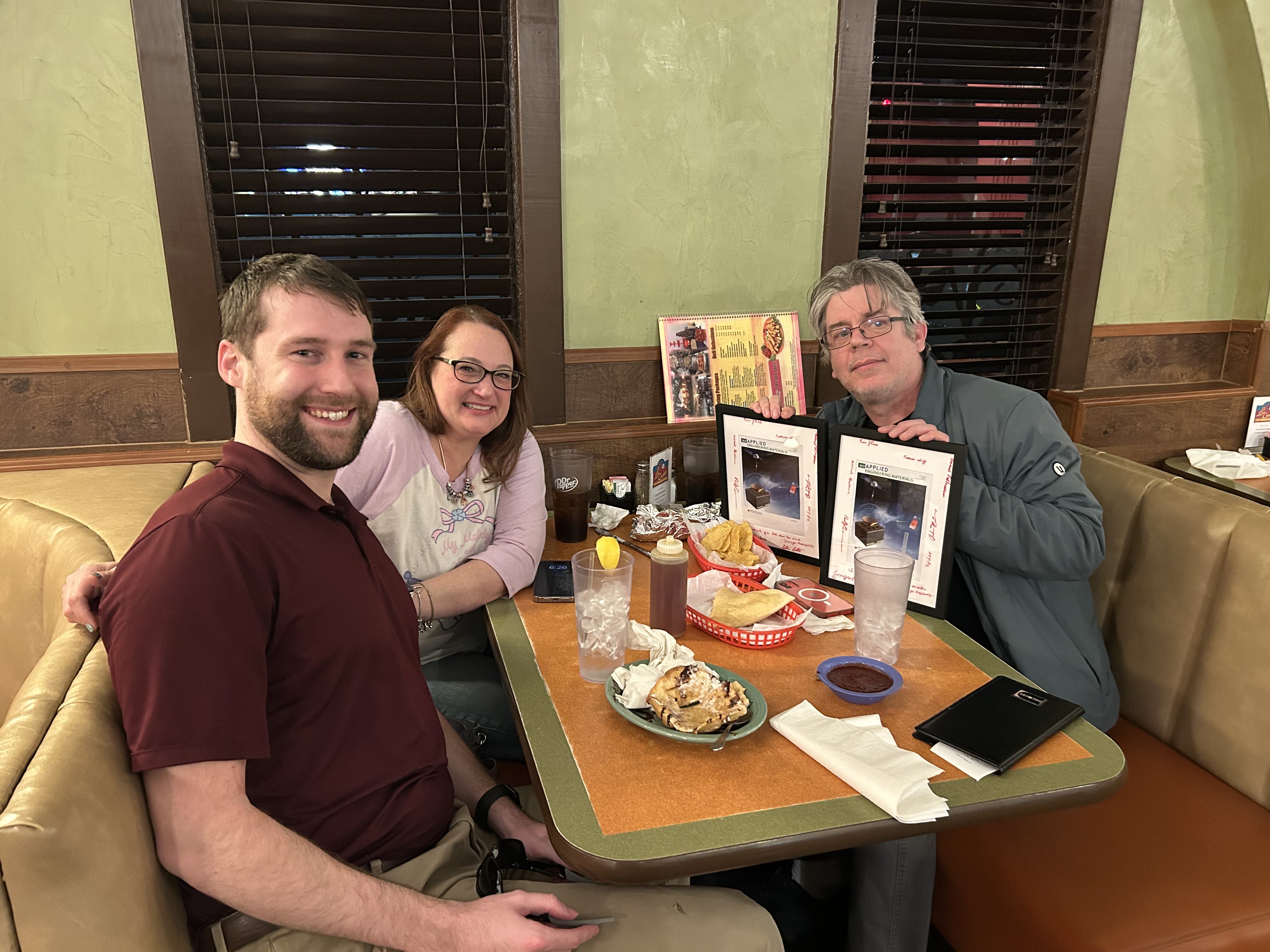
In February 2025, Hollenbeck, Sherburne and Abraham all found themselves in Albuquerque at the same time and met for dinner, where the researchers demoed the antenna prototype using the only heat source available –– a hot fajita plate Sherburne was eating from.

Michael Sherburne (left), Jennifer Hollenbeck (center) and Daniel Abraham (right) sitting together

“There’s this symbiotic thing between science fiction writers and engineers,” Hollenbeck says. “When we met we had such an amazing exchange.”

The researchers also gave Abraham two signed copies, one for him and one for Franck, of the ACS journal cover art as a thank you.

Even after the collision of science and fiction, the work continues. Abraham and Franck released the sequel in the James S.A. Corey series, The Captive's War, earlier this year. All the while, the team at the Applied Physics Laboratory continues to iterate on its work with hope the groundbreaking antenna may one day be deployed to solve real-world challenges.

“Hopefully, as scientists and technologists make their stuff, as they create this new possible future for us, there will be other science fiction writers who are inspired by the things that get made, and they can keep this whole process going,” Abraham says.

Global friendship leaves lasting legacy at UNM Engineering

Article by Carly Bowling | UNM Engineering | 2026

Andres Salazar (left) standing with Benjamin Garba Ishaku (right)

When Andres Salazar arrived at The University of New Mexico in 1959, he was a first-generation college student from northern New Mexico, eager to follow the nation’s call for more scientists and engineers in the wake of Sputnik. What he didn’t know then was that his time on campus would spark a lifelong friendship and a scholarship honoring it.

During Salazar’s years studying electrical engineering, he became close with several international classmates, including Benjamin (Benji) Garba Ishaku, an older student from newly independent Nigeria attending UNM on a Nigerian governmental scholarship. Ishaku and other international students formed a tight-knit study group with Salazar, motivating each other to do well. Together, they navigated demanding coursework, shared ambitions and built a sense of belonging as they each chased opportunities that would shape their futures.

“Benji had this enthusiasm and commitment that spurred me on,” Salazar said.

After completing their bachelor’s degrees, Salazar and Ishaku each earned master’s degrees at UNM. Then doctorates at Michigan State University. After graduating, their careers took them to different parts of the world. Salazar worked at Bell Telephone Laboratories, Infinit and other companies before establishing Suntek Industries Inc. Ishaku returned to Nigeria to teach engineering at Kano University, later retiring to be a solar energy consultant in the Nigerian private sector. While distance separated the two friends, they never lost touch.

“He always remembered UNM and our days there and every time he came to the United States, he made a point of visiting friends and the campus,” Salazar said.

Years after their time together in school, Ishaku received a $10,000 inheritance. He entrusted it to Salazar to invest on his behalf but never reclaimed the money before he died. Wanting to honor Ishaku and the bond they forged at UNM, Salazar used the money, combined with his own contribution, to establish the Ishaku-Suntek Scholarship in the School of Engineering. The fund now pays tribute to Ishaku’s memory while supporting undergraduate students in the School of Engineering.

“There was a camaraderie among all of us in school and while I’m sure other generations have established similar friendships, I wanted to put something of a stake in the ground to honor this one,” he said.

Salazar’s connection to UNM has only deepened over time. After retiring from industry in 2002, he returned to campus as the PNM Chair, teaching in both the School of Engineering and the Anderson School of Management. He later taught at Northern New Mexico College and Southern Methodist University. Salazar has devoted his post-retirement years to supporting STEM education nationwide. He now evaluates federal grant programs, judges science fairs, and encourages young people from underrepresented backgrounds to pursue engineering.

The scholarship represents everything that shaped him, Salazar says, including opportunity, mentorship, global connection and the belief that engineering can change lives — not only for individuals, but for entire communities.

Five for Eric Lang

Article by Carly Bowling | UNM Engineering | 2026

Eric Lang joined the Department of Nuclear Engineering in fall 2022, specializing in nuclear fusion engineering and nuclear materials.

Eric Lang

What made you decide to go into nuclear engineering?

I’d always had an interest in CERN and high-energy physics. The Large Hadron Collider was turned on when I was in high school and I majored in physics in college. When I started taking classes, there was a lot of data analysis on the computer, and I didn’t really want to do that, so I started to seek out ways to work with my hands. I’ve always had a fascination with all things small. When I was figuring out the path I wanted to take, I knew that doing something with electron microscopy really appealed to me. I took an undergraduate course in nuclear fusion and I thought it was an interesting problem area. The issues the materials faced were harsh and complex and I wanted an opportunity to help solve those problems. That led me to graduate research in that field and that’s how I eventually came to nuclear engineering.

What is the focus of your research?

The focus of my research is on materials in extreme environments –– in both fusion and fission reactors. Materials that are going to see high temperatures and stresses. My work includes understanding material degradation mechanisms, designing new materials to tolerate the environmental conditions better to be safer and longer lasting, and then watching how the materials are degrading and behaving in real-time. We have projects seeking to understand how metals degrade under radiation, stress, high temperatures, and corrosive conditions, all in an attempt to develop materials that have longer lifespans.

What projects are you working on?

My lab designs materials and then tests them to see how they behave under stress in an effort to make materials that are more resilient to their operating conditions and can last longer, improve system efficiency, reduce cost and improve reactor safety. With regard to fusion reactors, which have not been built yet, these materials may help us successfully build one for continuous operation. We have a couple of projects related to fusion energy. In one, we are designing multiple-component alloys made up of a number of refractory elements. We were examining how they behaved when helium ions impacted these materials. We did some computer simulations to understand how these materials evolve. We have two other projects of a similar vein. One of them utilizes an additive manufacturing process called cold spraying, so we are making coatings of tungsten and seeing how they might tolerate the conditions of a fusion environment. We are also trying to make tungsten composites with enhanced thermal conductivity to take heat away faster to improve the heat efficiency of fusion reactors.

What do you wish more people knew about materials science in nuclear engineering?

Materials science within nuclear engineering is very important. Materials dictate the potential operating conditions of any power plant or reactor. You can conceptually design a reactor to have any number of conditions, but if materials can’t handle it, you cannot build it. Our ability to ensure materials can withstand these conditions is always going to limit our ability to deploy these technologies. I do think this work really is where the engineering design meets the science because we are both understanding what’s happening at the nano or atom scale, while also considering the meter-sized components and trying to bridge that gap between the science and the construction engineering.

What do you like to do for fun?

I love being outside and being active. I coach a youth track and field and cross-country team for ages 7 and up. I’m also a big runner and biker. If you see someone riding a green bike around campus, it is probably me. Around Albuquerque, the Bosque is unbeatable for biking. I love seeing the wildlife and the bats that fly around there. I also enjoy heading out to Oak Flats or Placitas for biking.